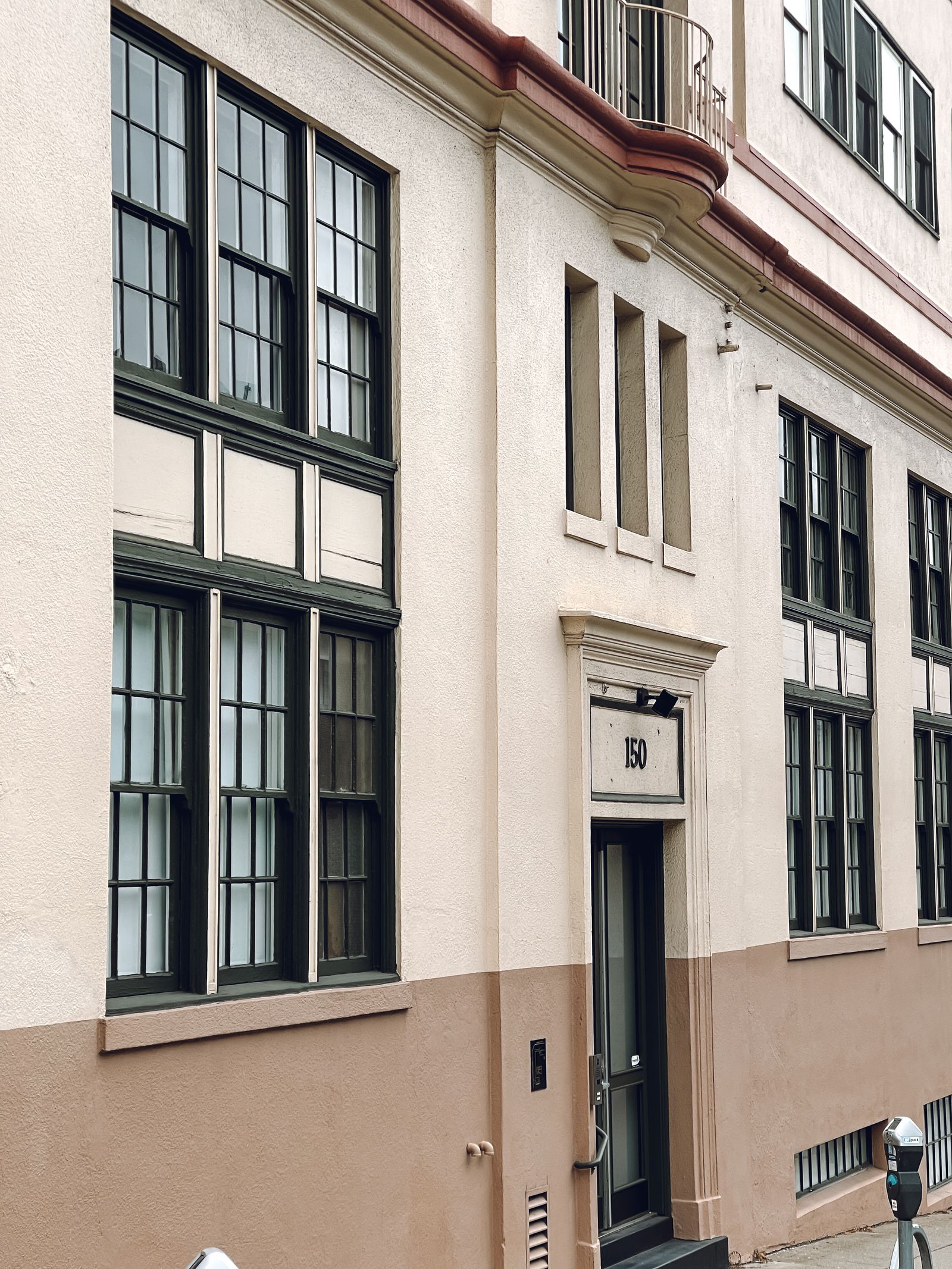
Begin with the actual Lynchburg building
Lynchburg properties often combine brick and mortar with precast concrete, painted block, stucco, EIFS, metal, glass, awnings, signs, sealants, and older repairs. Downtown buildings may have historic masonry, narrow sidewalks, recessed entries, storefront glazing, upper stories, and shared walls. Wards Crossing and other retail areas can combine broad parking fields, tenant signs, drive aisles, landscaping, and busy entrances. Timberlake Road and nearby office or medical corridors may add sloped lots, canopies, loading areas, patient drop-offs, and multiple operating schedules. The cleaning method should follow the material and condition of each elevation.
A compatible soft-wash process may help with organic staining, pollen, mildew-like growth, bird residue, and some atmospheric film when solution, dwell time, rinse, and protection fit the substrate. It is not a repair for open mortar, cracked concrete, spalling, failed sealant, leaking roof edges, corrosion, or failing paint. A dark area can also be mineral residue, oxidation, soot, embedded traffic film, or a drainage defect. A useful quote identifies likely stain causes, representative test areas, included elevations, expected improvement, and limitations before work starts.
- Separate brick, mortar, concrete, glass, metal, painted, stucco, EIFS, and coated zones.
- Distinguish organic staining from minerals, oxidation, exhaust film, and repeat water paths.
- Use representative test areas when coatings, repairs, or stain causes are uncertain.
- Keep masonry repair, restoration, leak diagnosis, and coating replacement outside a routine wash scope.
Shape the scope around local corridors
Downtown Lynchburg work may need to preserve storefront access, sidewalks, deliveries, outdoor seating, parking, and pedestrian movement around Main Street, Court Street, Church Street, and nearby blocks. Historic-looking masonry deserves a condition review before rinsing. Mortar loss, soft brick, patched joints, and old coatings can change the acceptable method. A small entrance refresh, a full facade wash, and recurring maintenance are different scopes and should be priced and scheduled as such.
Wards Crossing and the broader Wards Road retail corridor may require tenant notices, sequencing around shoppers, protected storefront glazing, clear drive aisles, and a plan for signs, carts, landscaping, and curb inlets. Timberlake Road properties can have steep approaches, divided parking, sloped sidewalks, and drainage that moves quickly after a storm. Medical and office corridors need patient, visitor, employee, accessible-route, and emergency-access planning. Industrial sites may add loading docks, equipment, security, shift changes, and heavier deposits around service areas.
The James River hills and creek-side setting can make a building look straightforward from the road while its rear elevation sits above a steep grade, retaining wall, ravine, or low drainage point. A proposal should describe elevations, access, protection, water supply, hose routing, and runoff assumptions in language the facilities team can use. Height alone does not decide the access method; slope, stand-off distance, public separation, material, wind, and recovery space matter too.
Account for humidity, pollen, storms, and shade
Lynchburg's warm seasons, humid periods, tree cover, and spring pollen can leave deposits on ledges, canopies, signs, glazing, shaded walls, and landscape-side elevations. North-facing masonry, recessed entries, parapets, and areas below roof edges may stay damp longer than a sun-exposed wall. Pollen can make a cleaned surface look dusty again quickly without meaning the wash failed. The work plan should distinguish a removable deposit from a recurring environmental exposure and set expectations accordingly.
Storms can dilute a treatment, change a rinse path, make a slope slick, or move water toward a parking-lot inlet, swale, creek, or lower neighboring property. Wind affects overspray, barriers, hoses, lifts, and any aerial work. The forecast should be reviewed for rain, lightning, gusts, humidity, surface temperature, and drying time before each phase. A calendar date is not a weather plan. The site contact and crew should agree on pause and reschedule triggers before setup.
Repeat streaks may point to a blocked gutter, overflowing downspout, failed joint, parapet defect, irrigation spray, condensation, or roof-edge problem. Cleaning can document a visible water path, but it should not be presented as a substitute for roofing, masonry, plumbing, painting, or building-envelope repair. Addressing the source is often necessary when one elevation soils faster than the rest.
- Review forecast, wind, rain, lightning, humidity, surface temperature, and drying time before each phase.
- Inspect gutters, scuppers, downspouts, parapets, canopies, joints, and low walls for repeat wetting.
- Protect plants, air intakes, glazing, metals, vehicles, signs, and finished surfaces from solution and overspray.
- Set weather pauses before hoses, barriers, lifts, or aerial equipment are staged.
Plan steep access and occupied-site coordination
Before application, map patient and public entrances, accessible routes, employee doors, loading docks, air intakes, cameras, electrical equipment, landscaping, vehicles, signs, and neighboring tenants. Downtown sidewalks may need a pedestrian-safe sequence. A medical building may need a continuous drop-off and emergency route. Retail work may need tenant communication and a visible entrance left open. An office or industrial property may prefer work around arrival, shift, or delivery windows.
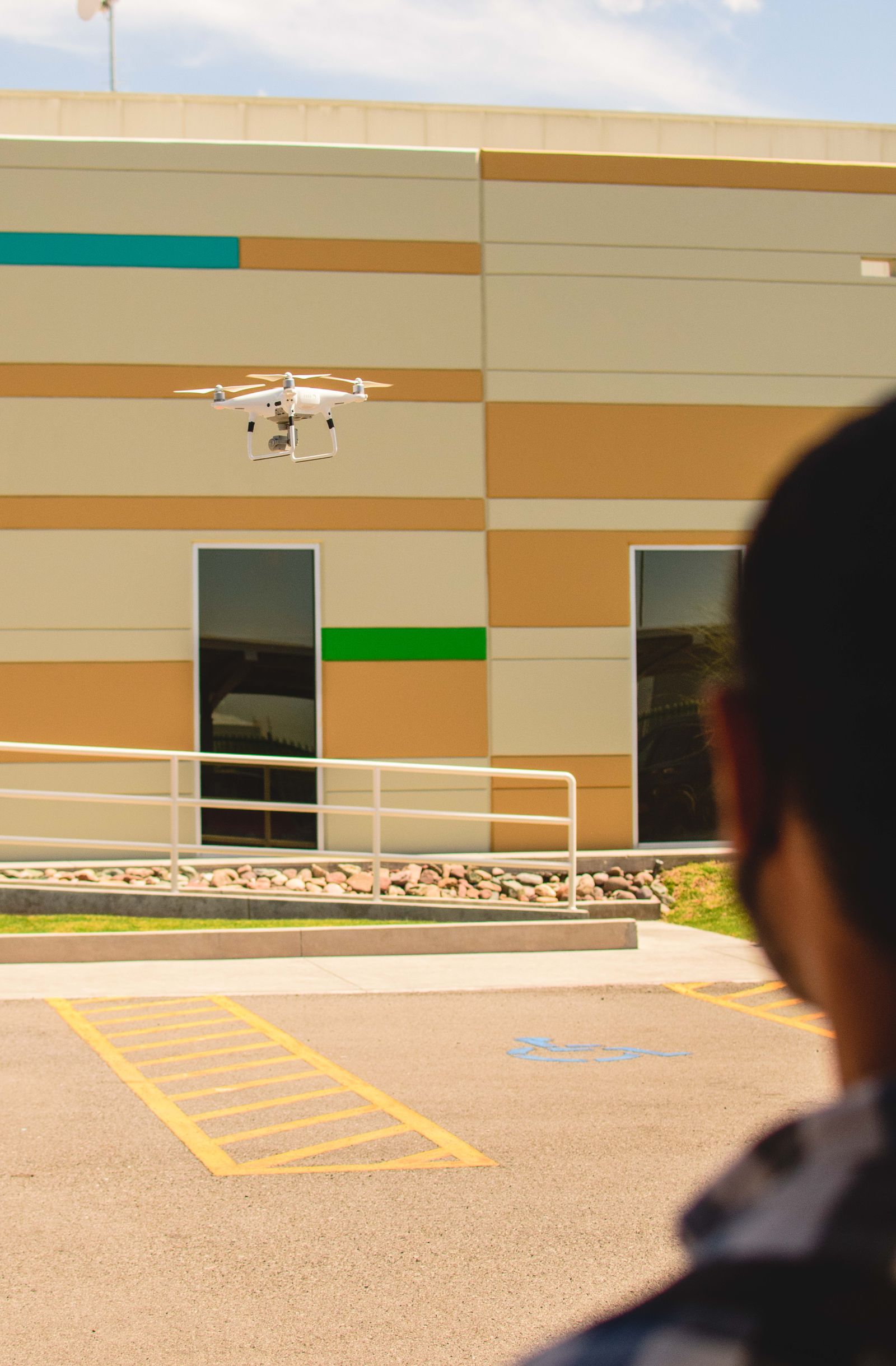
Steep access changes how equipment, hoses, barriers, water, and runoff are managed. Confirm whether a lift can be positioned level, whether a truck or trailer can stage without blocking the route, where a spotter is needed, and how equipment will be recovered on a grade. A lift, water-fed pole, controlled ground setup, aerial support, or hybrid plan may be appropriate depending on the elevation. Aerial assistance is considered only when facade compatibility, wind, stand-off distance, launch and recovery space, visual control, public separation, airspace, and drainage support it.
Document the pre-work condition, completed elevations, remaining deposits, and visible damage. If access controls are not adequate, work should pause while the plan changes. A clear record helps the owner separate cleaning results from pre-existing masonry, coating, sealant, drainage, or glass conditions.
- Locate accessible routes, entrances, air intakes, loading areas, landscaping, vehicles, and public paths.
- Confirm water access, hose routing, barriers, spotters, security, level staging, and emergency access.
- Coordinate patient, guest, tenant, employee, delivery, shift, and event activity in the work window.
- Record completed zones, remaining deposits, pre-existing damage, and conditions needing another trade.
Make runoff planning part of the quote
Lynchburg's stormwater system carries runoff through streets, inlets, pipes, culverts, and private or public best-management practices toward local creeks and the James River. A storm drain below a Downtown sidewalk, Wards Crossing lot, Timberlake Road property, or industrial loading area is not automatic permission for treated water to enter it. The plan depends on products, soil, rinse volume, slope, landscaping, drain type, property rules, and applicable requirements.
Possible controls may include diversion, collection, recovery, reduced-rinse methods, filtration, plant protection, disposal, or coordination with the responsible authority. Watch the first rinse and verify that hoses, barriers, and collection controls remain effective. Water can travel beneath a door, down a sloped lot, toward a creek-side low point, across a shared route, or into a neighboring tenant's area. If flow does not match the plan, pause and adjust.
Ask the proposal to state its drainage assumptions, included protection, weather contingencies, and exclusions. The result should be a property-specific scope, not a promise that every stain will respond or that every drain is available for discharge.
Request a Lynchburg quote with useful details
Send the property address, building use, approximate height, facade materials, problem elevations, desired timing, operating hours, water access, nearby drains, steep grades, and known leaks, loose materials, coating failures, or previous cleaning damage. Photos of the main entrance, shaded wall, upper elevation, roof edge, loading area, windows, landscaping, and parking drainage help prepare for a site review. Mention whether the goal is a tenant transition, event-ready appearance, recurring maintenance, sale preparation, or a focused stain investigation.
To discuss a Lynchburg property, call +1 239-351-2897 or email contact@dronebuildingcleaners.com. Drone Building Cleaners can review whether soft washing, controlled pressure, aerial assistance, or a hybrid method fits the building and prepare a quote around the outcome you need. The scope should make included elevations, access, protection, weather, drainage, limitations, and other-trade items visible.